
Category guide
What is governed BYOA?
Governed BYOA lets an organization use its own AI providers and credentials while the work system controls context, permissions, approvals, proof, and the record of what happened.
Practical guides to help you get the most out of ScrumDo, from planning and sensemaking to portfolio leadership and governed agents.
Start with the definition, inspect the complete product loop, then move into context, profiles, verification, attention, current customer proof, Enterprise adoption, and readiness.
Category guide
Governed BYOA lets an organization use its own AI providers and credentials while the work system controls context, permissions, approvals, proof, and the record of what happened.
Product walkthrough
Follow one work item through the complete governed loop, from lived customer evidence to a versioned specification, approved execution, independent QA, and a reviewable GitHub pull request.
Architecture guide
App-managed context gives an agent the smallest relevant, authorized evidence set for one run, with provenance, scope, expiry, and human control visible instead of relying on an opaque memory store.
Enterprise reference
A governance profile is a versioned policy bundle that turns an organization’s risk decision into visible run controls for context, tools, approvals, budgets, verification, and exceptions.
Strategy
Model oversight asks whether an AI system is approved and behaving within policy. Work-loop governance asks whether customer meaning, human decisions, agent action, proof, and learning stayed connected in one real piece of work.
Verification guide
Freeze the behavioral contract from the Product Spec before the maker begins. Separate the maker from the evaluator, then keep final acceptance with an accountable human.
Operations guide
A governed attention system routes the few decisions, proof gaps, exceptions, and risks that need a person back to the exact work context, while optional updates can be watched, muted, or delivered through configured channels.
Enterprise guide
Start with one bounded workflow and make the provider, data, identity, context, approval, proof, audit, and incident boundaries reviewable before expanding agent authority or organizational reach.
Current customer proof · July 11, 2026
Two current customer interviews describe how a shared work surface helped a manager and Scrum Master align priorities, see blockers, support the team, and give customers a traceable account of requested work.
Interactive assessment
Score purpose, context, authority, connectors, approvals, proof, attention, recovery, and human accountability.

Governed BYOA lets an organization use its own AI providers and credentials while the work system controls context, permissions, approvals, proof, and the record of what happened.
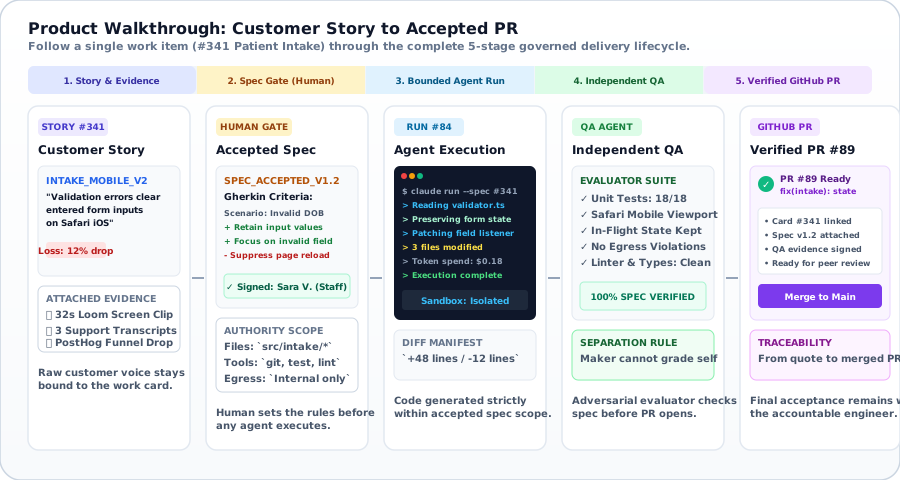
Follow one work item through the complete governed loop, from lived customer evidence to a versioned specification, approved execution, independent QA, and a reviewable GitHub pull request.
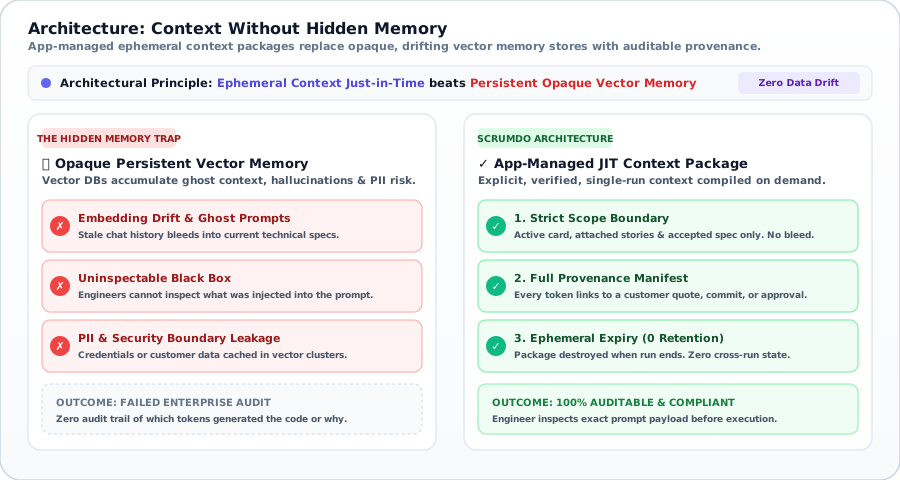
App-managed context gives an agent the smallest relevant, authorized evidence set for one run, with provenance, scope, expiry, and human control visible instead of relying on an opaque memory store.
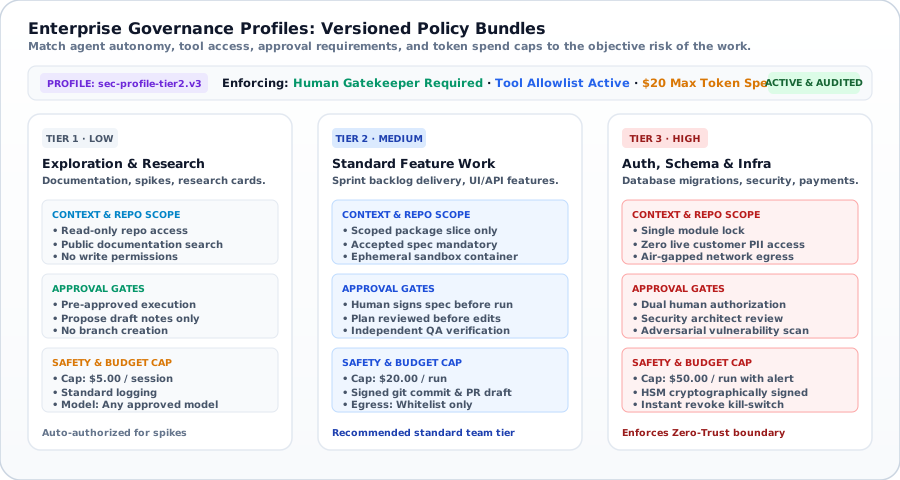
A governance profile is a versioned policy bundle that turns an organization’s risk decision into visible run controls for context, tools, approvals, budgets, verification, and exceptions.
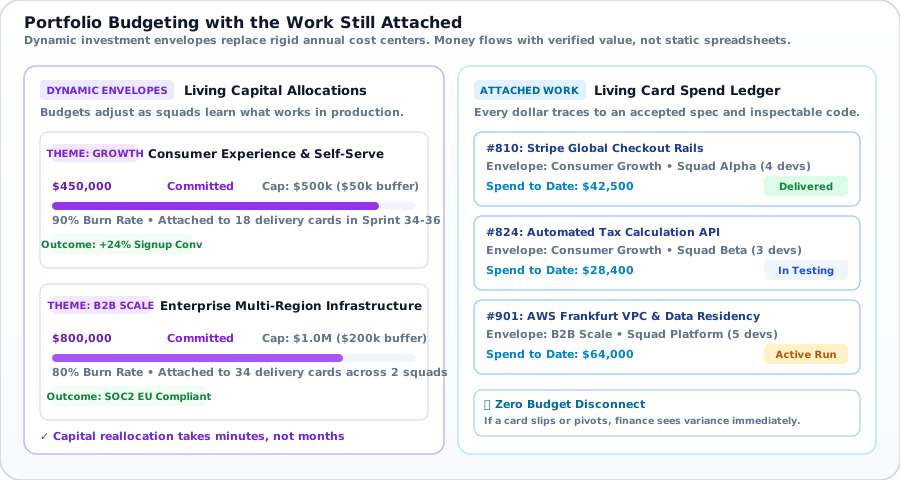
When leaders can see spend but not the work it shapes, budgeting becomes theater. Keep budget close to the actual work so spend, labor, timing, and outcomes stay honest.
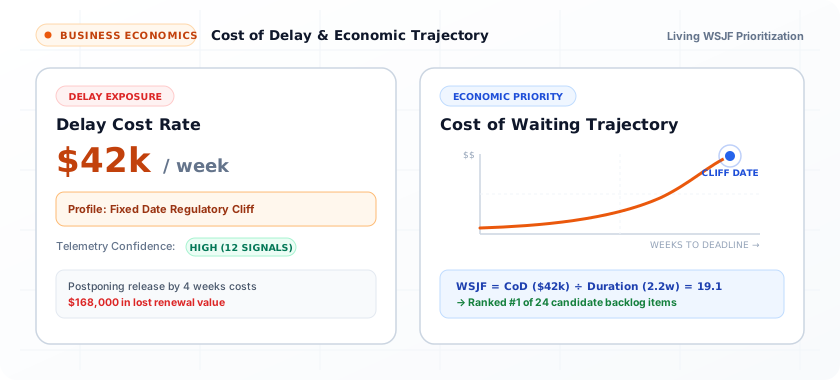
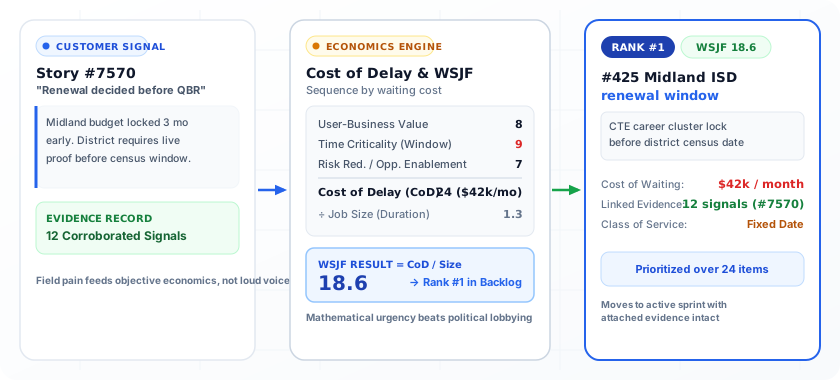
Most prioritization debates are arguments about meaning, not math. Cost of Delay gives a team one sharper, shared question, what gets more expensive the longer it waits?, so you can tell expensive delay apart from merely loud work.
Filter by category or search titles and summaries. Category sections below update as you browse.
Define governed BYOA, follow the complete work loop, and prepare agent use for Enterprise review.
Category guide
Governed BYOA lets an organization use its own AI providers and credentials while the work system controls context, permissions, approvals, proof, and the record of what happened.
Product walkthrough
Follow one work item through the complete governed loop, from lived customer evidence to a versioned specification, approved execution, independent QA, and a reviewable GitHub pull request.
Architecture guide
App-managed context gives an agent the smallest relevant, authorized evidence set for one run, with provenance, scope, expiry, and human control visible instead of relying on an opaque memory store.
Enterprise reference
A governance profile is a versioned policy bundle that turns an organization’s risk decision into visible run controls for context, tools, approvals, budgets, verification, and exceptions.
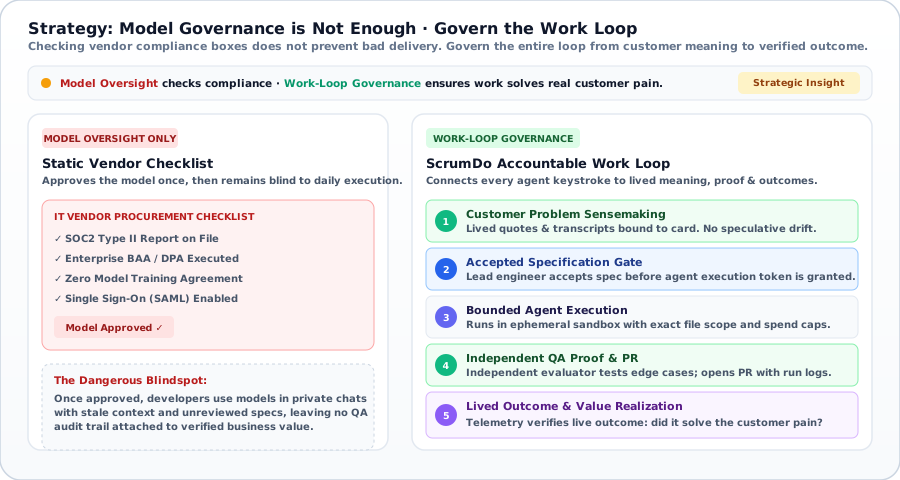
Strategy
Model oversight asks whether an AI system is approved and behaving within policy. Work-loop governance asks whether customer meaning, human decisions, agent action, proof, and learning stayed connected in one real piece of work.
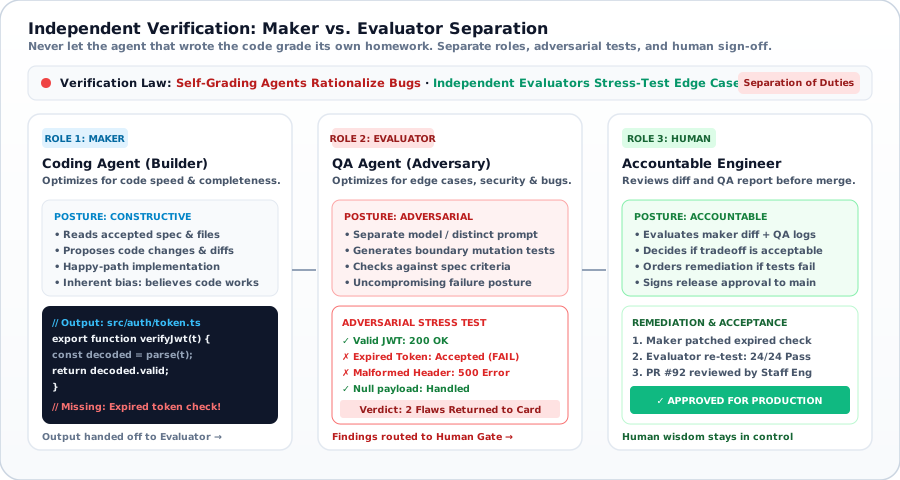
Verification guide
Freeze the behavioral contract from the Product Spec before the maker begins. Separate the maker from the evaluator, then keep final acceptance with an accountable human.
Operations guide
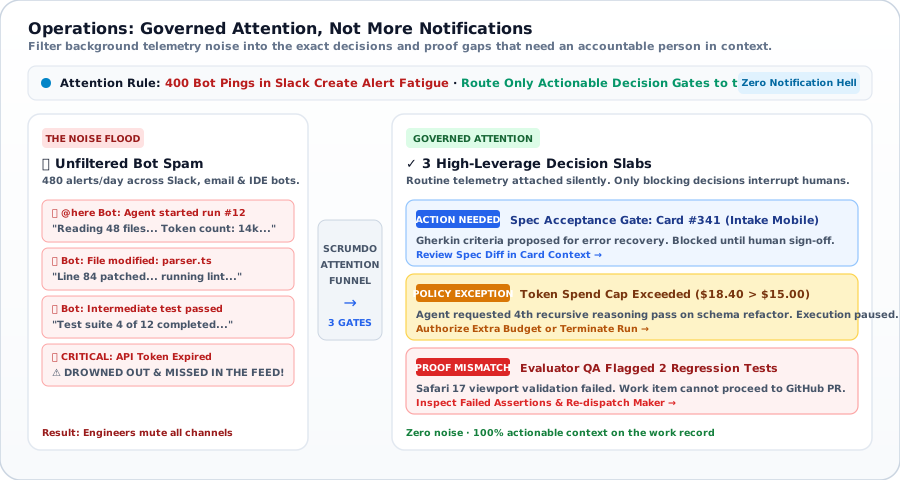
A governed attention system routes the few decisions, proof gaps, exceptions, and risks that need a person back to the exact work context, while optional updates can be watched, muted, or delivered through configured channels.
Enterprise guide
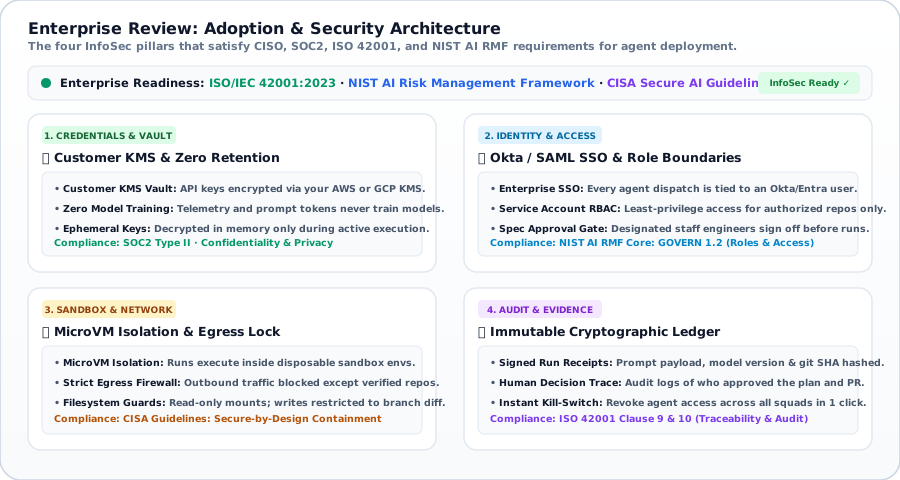
Start with one bounded workflow and make the provider, data, identity, context, approval, proof, audit, and incident boundaries reviewable before expanding agent authority or organizational reach.
Flagship guide
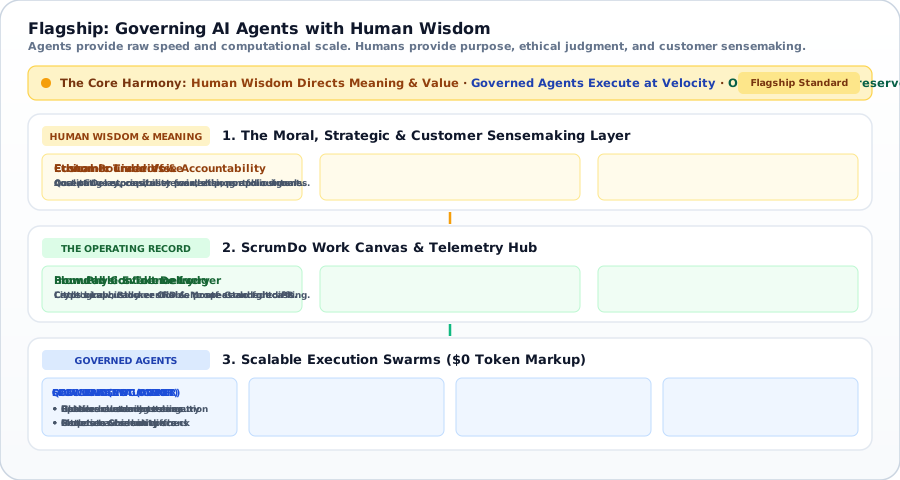
Agents can now act faster than an organization can finish making sense of the work. Keeping human wisdom in charge means sequencing by economic priority, deciding from real evidence in human sensemaking, and building trust that holds as you scale.
Guide
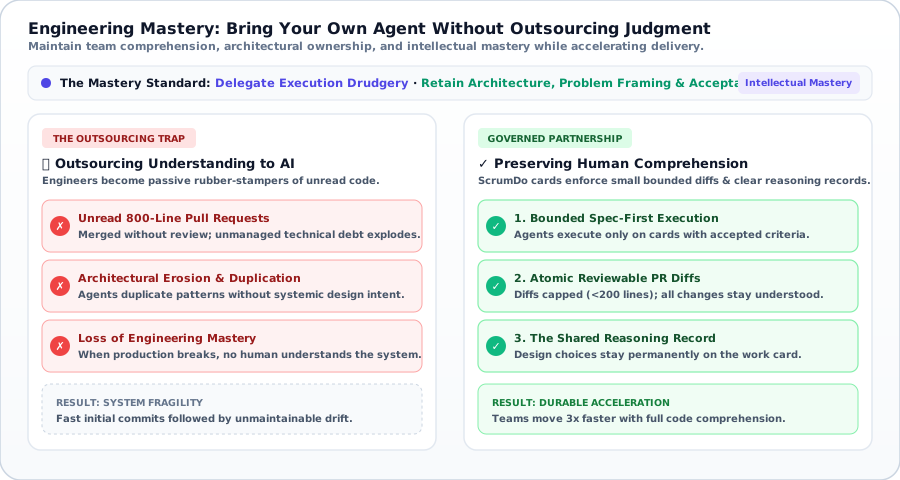
AI agents can move work faster than human judgment can travel with it. The discipline is keeping meaning, memory, and accountability attached.
Start with rooms, flow, and the basics of keeping stories attached to work.
Guide
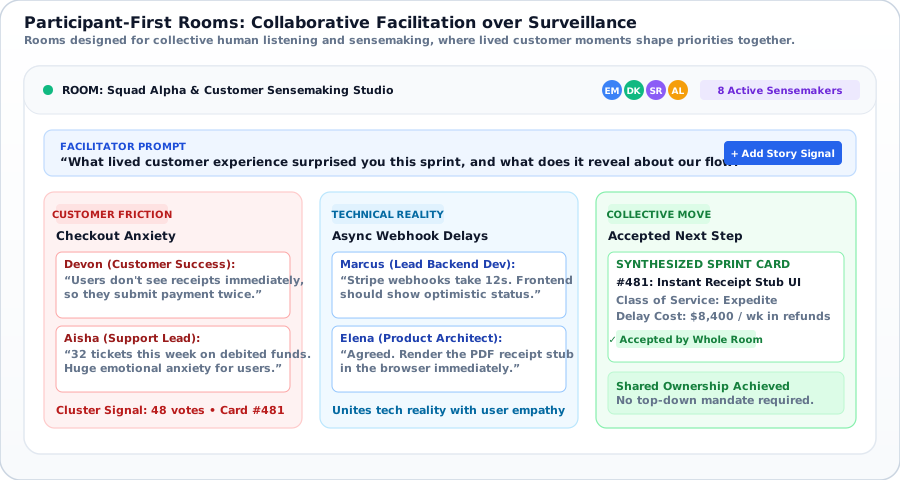
Give Crew, Managers, and customers, known and anonymous, one room where work, evidence, and decisions are visible, and where people interpret their own stories so trust is earned, not assumed.
Guide
A board is not a straight line. Different kinds of work move in different shapes, and ScrumDo lets you design those flows on a canvas, while still giving everyone one agreed structure that mirrors how value actually moves.
Guide
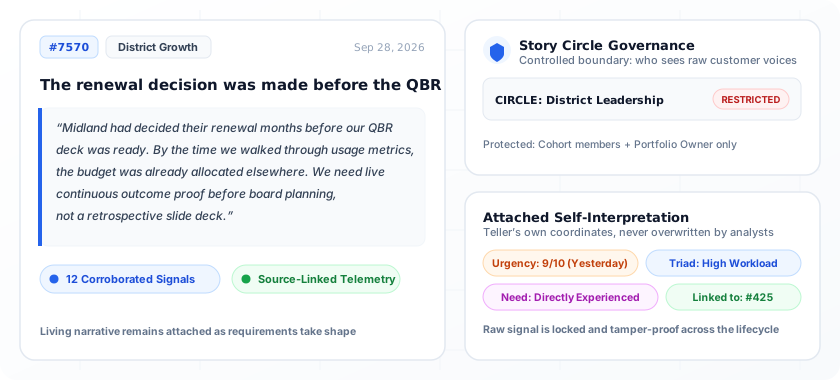
Human beings do not simply report reality; we live through it narratively. Keep the story whole and attached to the work you choose, instead of flattening it into a summary deck where the meaning quietly disappears.
Shape work, sequence priorities, and plan with evidence instead of hope.
Guide
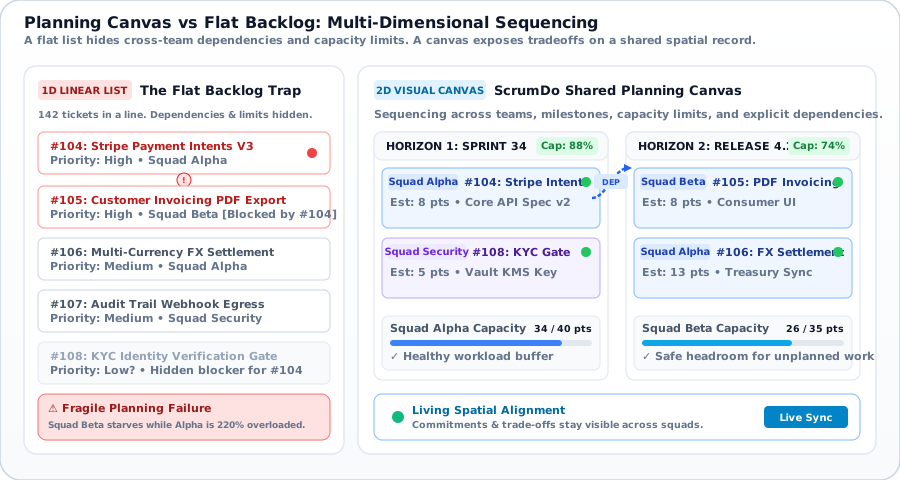
A list is fine until the work grows larger and more entangled than order alone can hold. Reach for a shared canvas when sequencing, dependencies, capacity, and tradeoffs all need to be visible in one place.
Guide
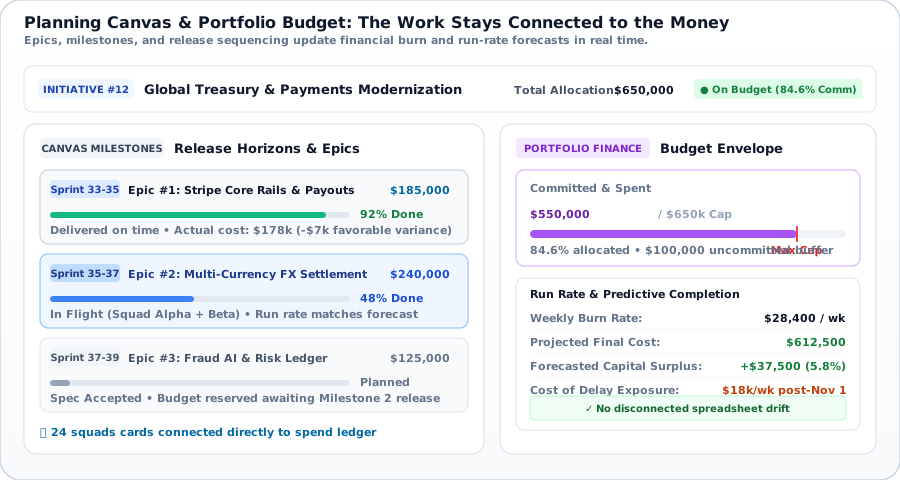
A plan is not a document you produce once; it is how strategy, tactics, and mission stay coherent as reality keeps moving. Sensemaking is what keeps a plan honest, and ScrumDo keeps it on one surface with the evidence still attached.
Guide
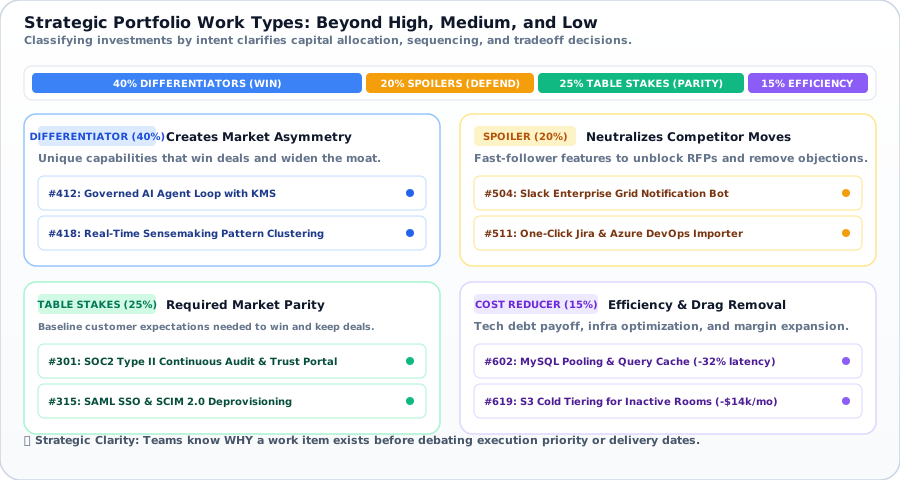
A portfolio queue is hard to manage when every item is just high, medium, or low priority. Work types give leaders clearer language for strategic intent before they decide sequence, budget, and release timing.
Guide
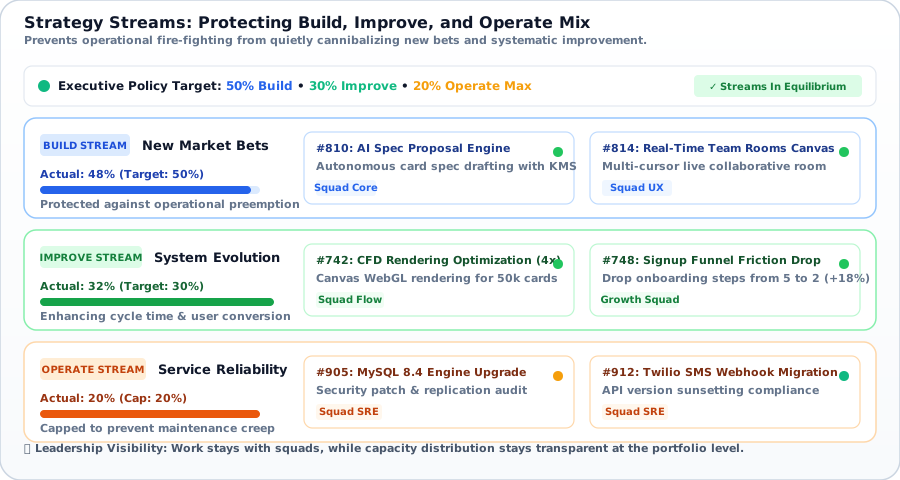
A portfolio review should show whether capacity is creating new value, improving the system, or absorbing operational load. Strategy streams make that mix visible without taking work away from the teams doing it.
Guide
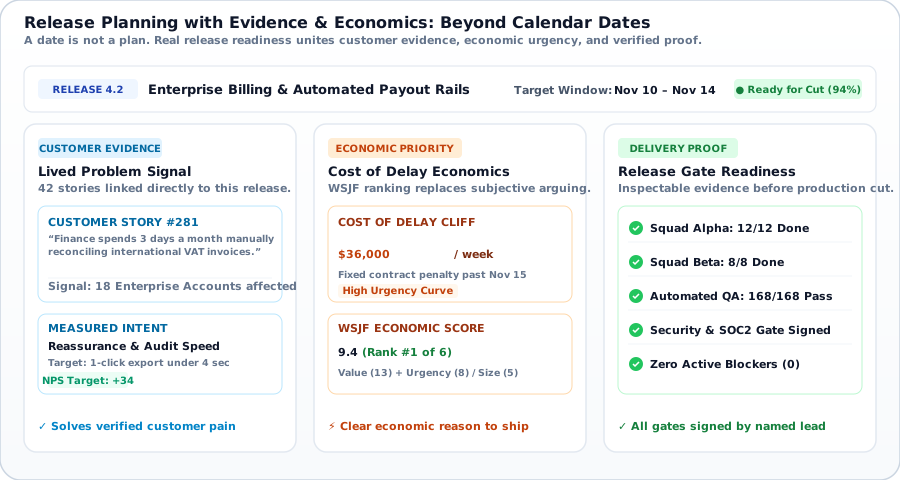
A release date is not a plan by itself. Better release planning keeps commitments, delivery assignments, readiness gaps, dependencies, capacity pressure, and economic tradeoffs visible together.
Guide
Most prioritization debates are arguments about meaning, not math. Cost of Delay gives a team one sharper, shared question, what gets more expensive the longer it waits?, so you can tell expensive delay apart from merely loud work.
Guide
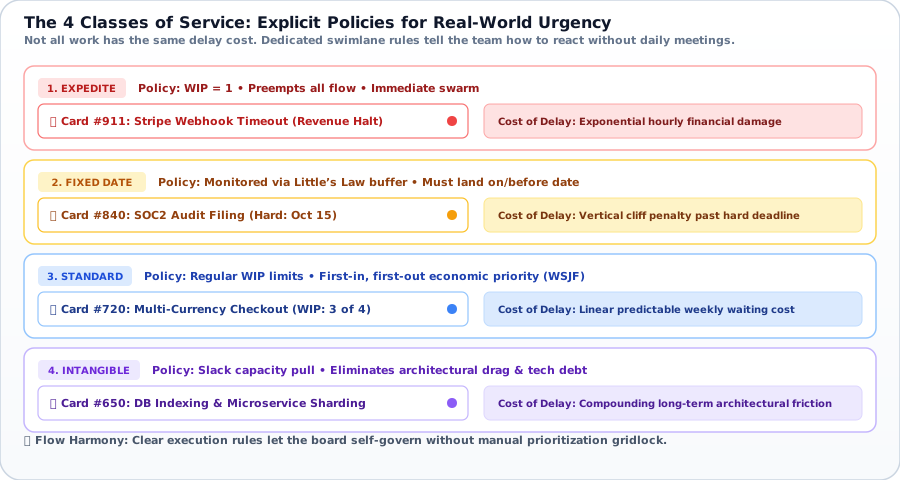
Not all work means the same thing or carries the same urgency. Classes of service let the board reflect that reality instead of flattening everything into one queue.
Guide
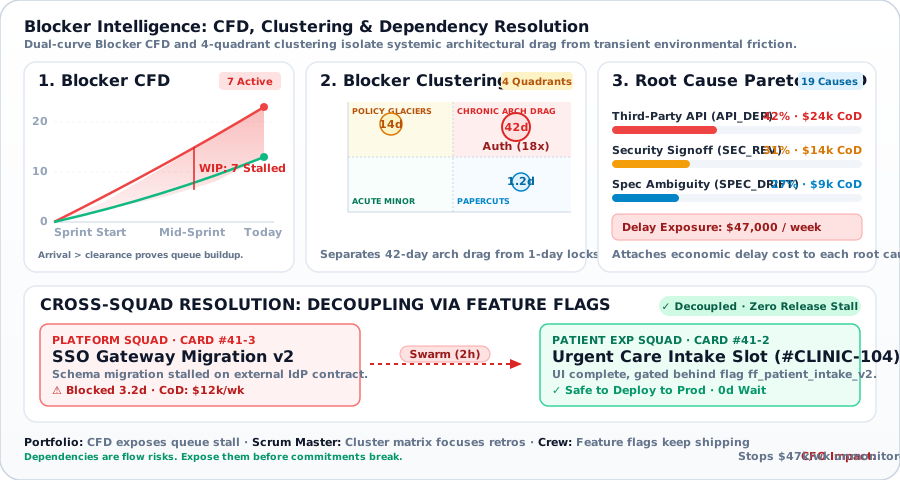
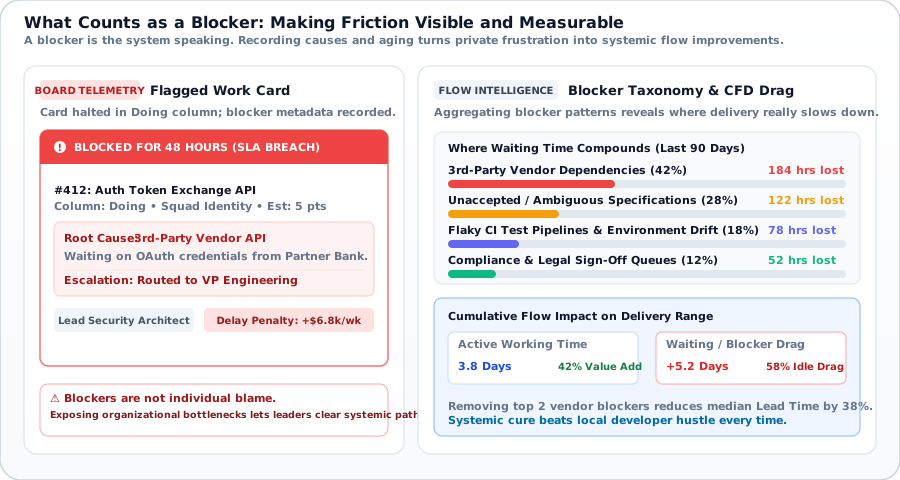
A blocker is the system trying to tell you something. Make it visible and named, instead of letting it harden into private frustration that the board never reflects.
Guide
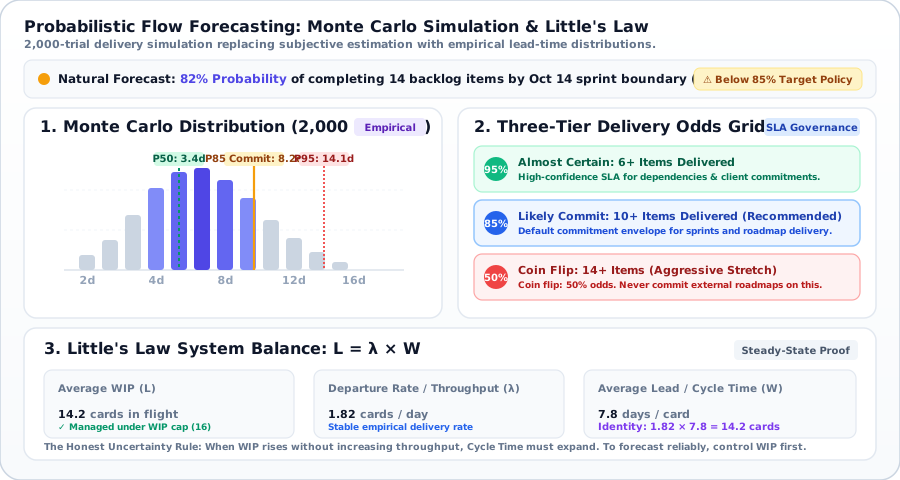
Hope is not a plan. Read the lead time histogram, apply Little’s Law, and watch the cumulative flow diagram so a delivery date becomes a defensible range you can manage, not a number someone wishes were true.
Guide portfolio decisions, budgets, and leadership reviews with the work still attached.
Guide
When leaders can see spend but not the work it shapes, budgeting becomes theater. Keep budget close to the actual work so spend, labor, timing, and outcomes stay honest.
Guide
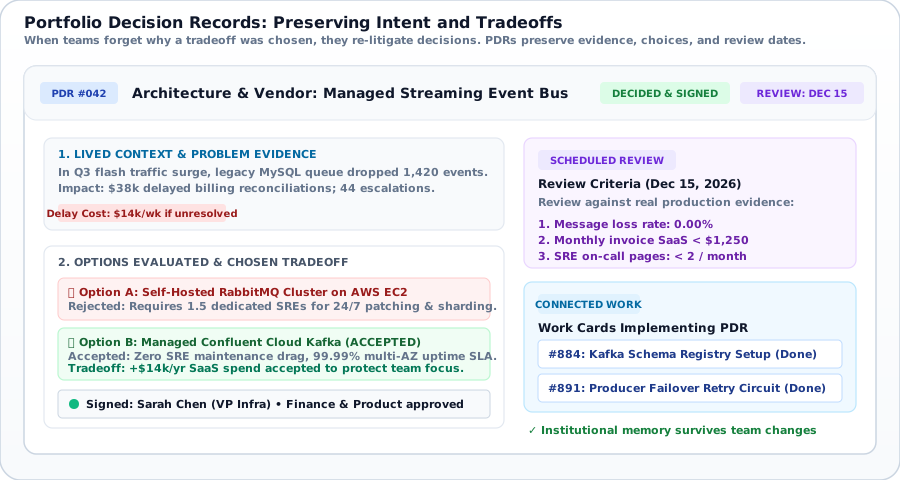
Portfolio decisions should not be reconstructed from chat, calendar memory, and status decks. Keep the decision, context, approval state, and planning changes attached to the operating record.
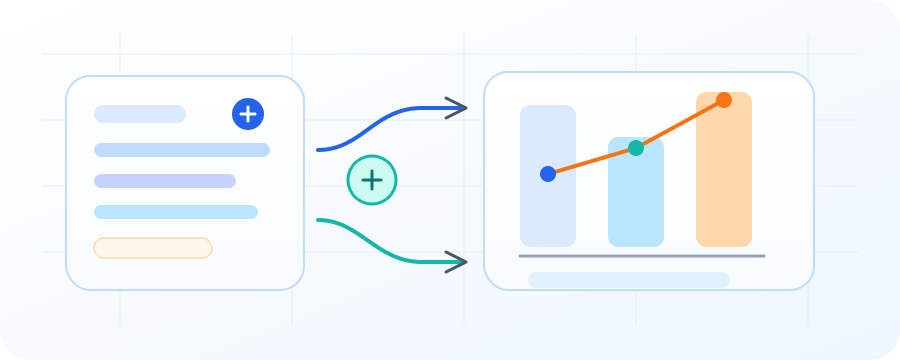
Guide
Front-line and worker experience can reveal friction that status reporting misses. Use it as bounded evidence for portfolio decisions, not as surveillance, performance scoring, or automatic proof.
Guide
Averages hide the differences that matter most. Compare what different segments are actually experiencing before the portfolio moves, instead of deciding from blended noise.
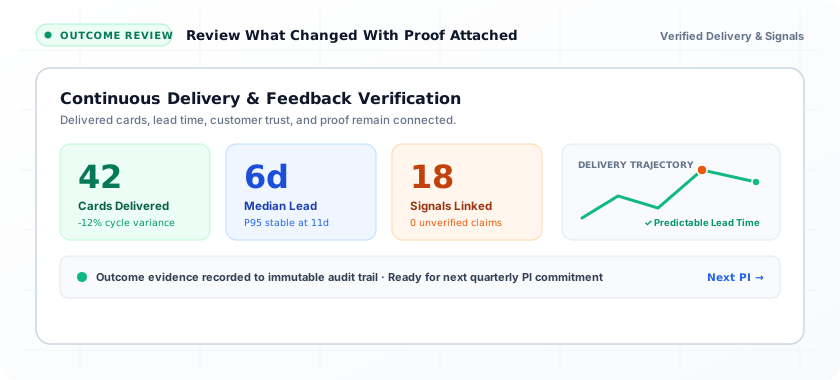
Guide
A review that ends at "approved and shipped" never asks what changed that mattered. Review portfolio moves against value, timing, risk, and service, and test for contribution rather than a tidy verdict.
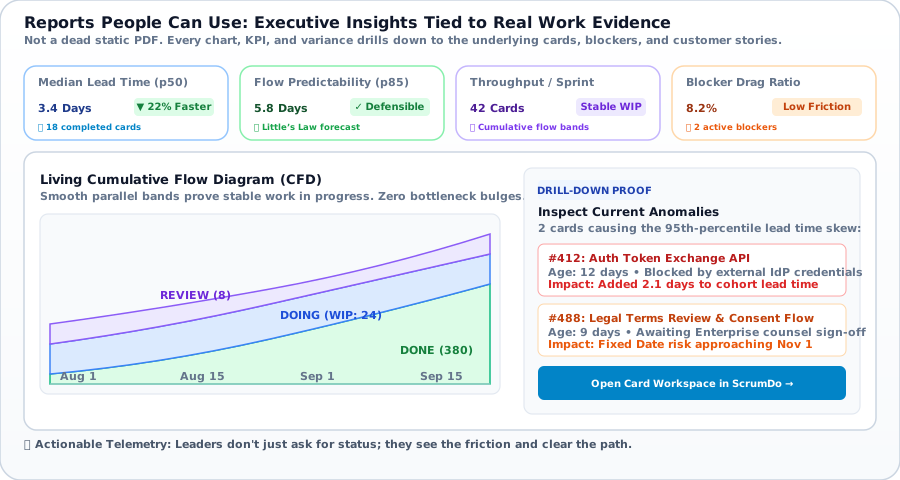
Guide
A report should let you see the work, not perform it. Reports and outcomes in ScrumDo stay rooted in actual evidence, the stories people told and the value tracked throughout, so they build trust instead of the fancy dashboards that quietly erode it.
Listen better, interpret honestly, and keep evidence attached to decisions.
Guide
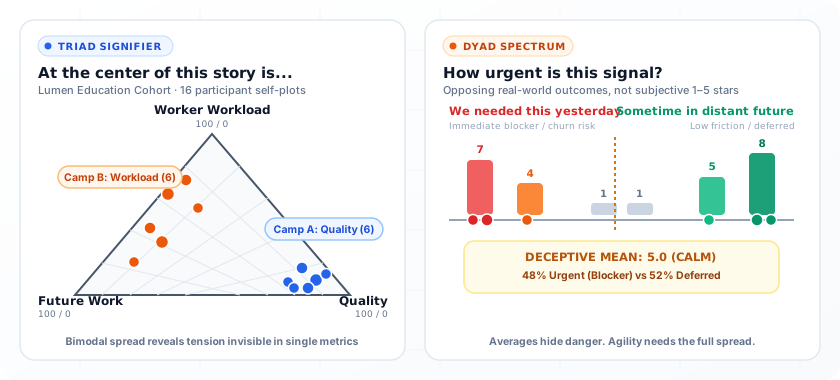
Some situations are too complex, too human, and too consequential for an off-the-shelf survey. This is how enterprises shape listening that fits their reality, so they can understand what is really happening and choose a next-wise action.
Guide
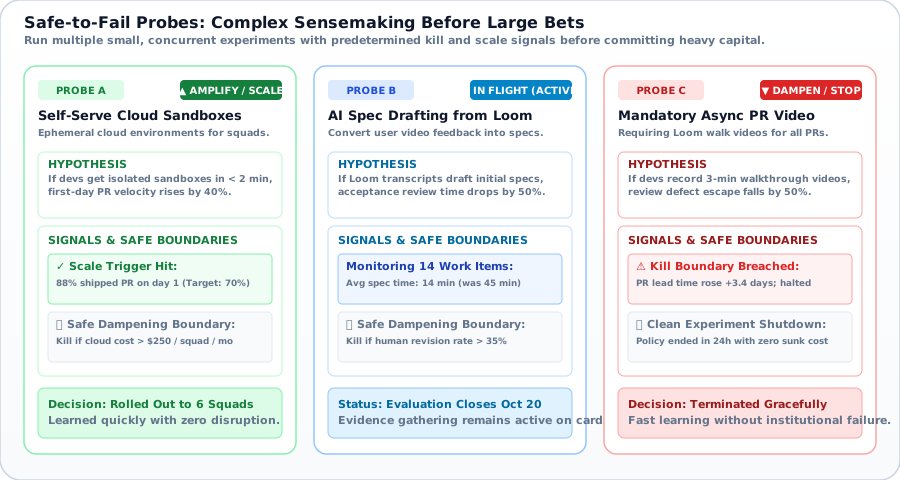
When the path is genuinely uncertain, courage is not the same as a big commitment. A learning probe is a small, safe-to-fail experiment designed to teach you something, and in ScrumDo it can be defined once, cloned across teams, run by governed agents, and rolled up into learning at scale.
Compare the plans for your work, or reach out if you need help shaping a governed agent pilot or larger portfolio rollout.