
Review what can change the work
Accepted-spec review, plan approval, final acceptance, and risk decisions arrive with the current target and required action.
Connect the AI models you already use. ScrumDo gives them deep context from customer stories and team judgment — so they can help deliver superior outcomes while you stay in control.
Humans keep judgment.
Governed attention
ScrumDo routes approvals, proof gaps, exceptions, and accepted risks back to the exact card and version that need attention. Optional updates can be watched, muted, or sent through configured channels without turning chat into the authority.
Accepted-spec review, plan approval, final acceptance, and risk decisions arrive with the current target and required action.
Failed runs, changed targets, blocking review comments, insufficient proof, and revision limits return to a person instead of disappearing into logs.
People can watch selected work and tune optional updates. Policy-protected acknowledgments remain visible until an authorized person handles them.
Slack and Microsoft Teams can deliver a safe summary when configured. Approval, acknowledgment, and the audit record remain in the governed work surface.
Read the governed attention guideAgents participate across all four layers — not in a separate chat you have to context-switch into.
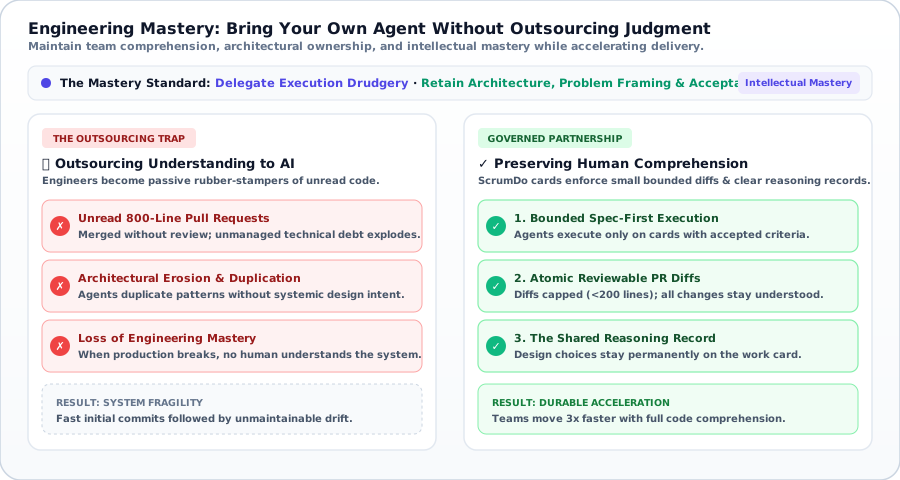
Agents suggest. Humans decide. Nothing becomes official until a person accepts it.
Most tools bolted on AI. ScrumDo is a work system where governed agents were always meant to participate.
One work record for planning, flow, and delivery. Agents surface context, draft proposals, and execute only through that governed card. Humans interpret, decide, and accept what becomes official.
Agent economics & zero markup
Other tools charge an extra $7–$20 per user every month for a closed chatbot wrapper. ScrumDo charges $0 platform markup—letting your engineers connect the frontier subscriptions (Claude, Cursor, Codex, Grok, Copilot) they already pay for.
| Platform | AI Pricing Model | Per-Seat Surcharge | Annual AI Cost (25 Users) | Model Freedom | Governance & Approvals |
|---|---|---|---|---|---|
| Atlassian Jira (Rovo AI) | Per-seat monthly add-on fee | +$20 / user / mo | $6,000 / year | Closed suite model (Atlassian proprietary) | Basic workspace permissions; no card-spec provenance |
| ClickUp (ClickUp Brain) | Mandatory workspace per-member fee | +$7 / user / mo | $2,100 / year | Closed wrapper bot; cannot bring custom models | Basic chat responses; no token budget limits |
| Notion (Notion AI) | Per-member add-on fee | +$8–$10 / user / mo | $2,400–$3,000 / year | Closed vendor wrapper | Document-only assistant; no card execution |
| ScrumDo Governed BYOARecommended | $0 platform markup (Bring Your Own Agent) | $0 / user / mo | $0 (Direct provider at cost) | Any frontier model: Claude, Cursor, Codex, Grok, Copilot | Strict human approval, token budgets, card context provenance |
Three levels of involvement
ScrumDo supports three levels of agent involvement, always keeping human judgment at the center.
You trigger it.
Manually ask your agents for help directly inside cards and boards. They read real work context, customer stories, and team judgment to provide relevant assistance.
Your workflow triggers it.
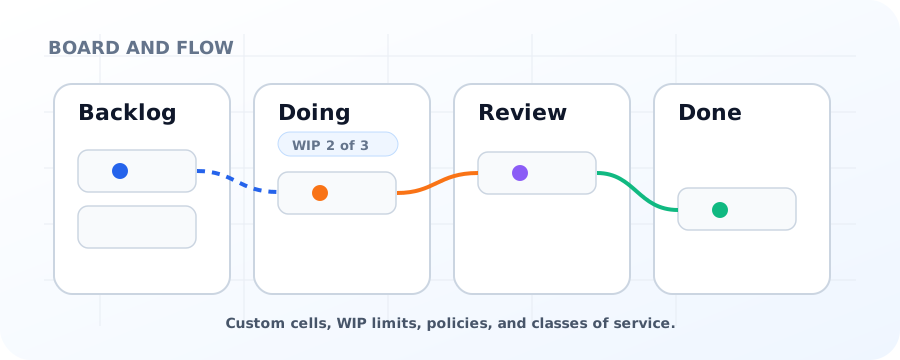
Use Flow Rules to automatically involve agents when specific conditions are met. Every draft or action requires human review before execution.
You bring your own.

Agents operate across multiple rooms and portfolios with context carried by the app and governance applied at each boundary. Humans retain full oversight of sensemaking and decisions.
Where agents participate
the system
Rooms, policies, portfolio economics, and governance span the whole operation.
views
Delivery, planning, and portfolio surfaces read the same underlying record.
workflow states
Where work waits, where Flow Rules fire, and where WIP limits keep flow honest.
commitments
Stories, specs, evidence, and agent proof live on the governed work record.
How it works
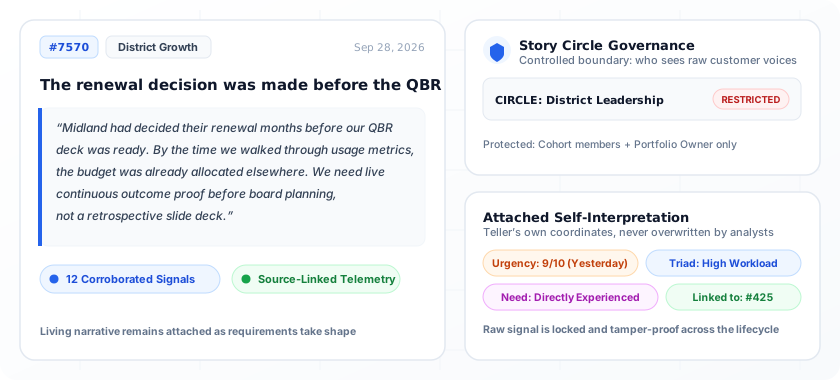
This allows your agents to produce more relevant and useful output because they operate inside real work context instead of isolated prompts.
Governed lifecycle
Six steps where agents propose, humans accept, and proof returns to the same card, not a side chat.
Customer stories, team judgment, card fields, blockers, and source-linked evidence stay together.
An approved agent can propose a spec from the card, interpreted stories, evidence, and repo context.
The accepted spec changes only when a human reviewer accepts, edits, or supersedes the proposal.
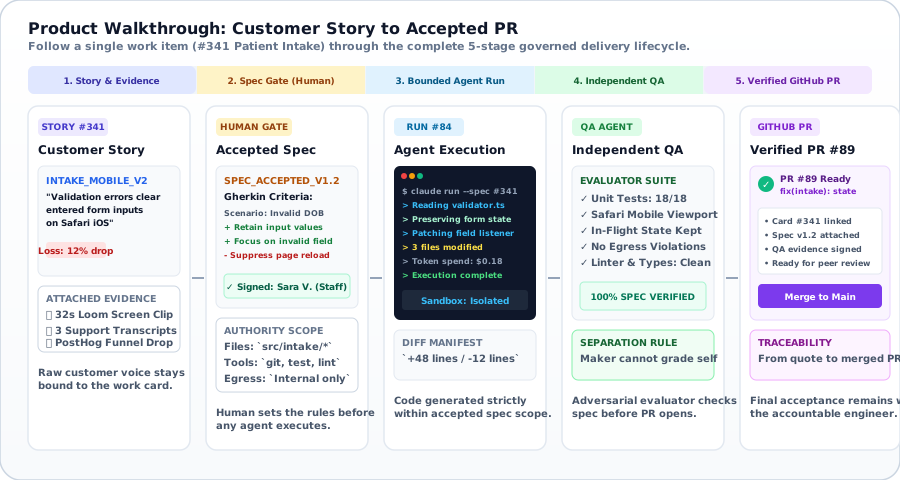
The execution plan is visible before the run, including intended files, checks, and assumptions.
Execution waits for approval. The reviewer can approve, request changes, or cancel.
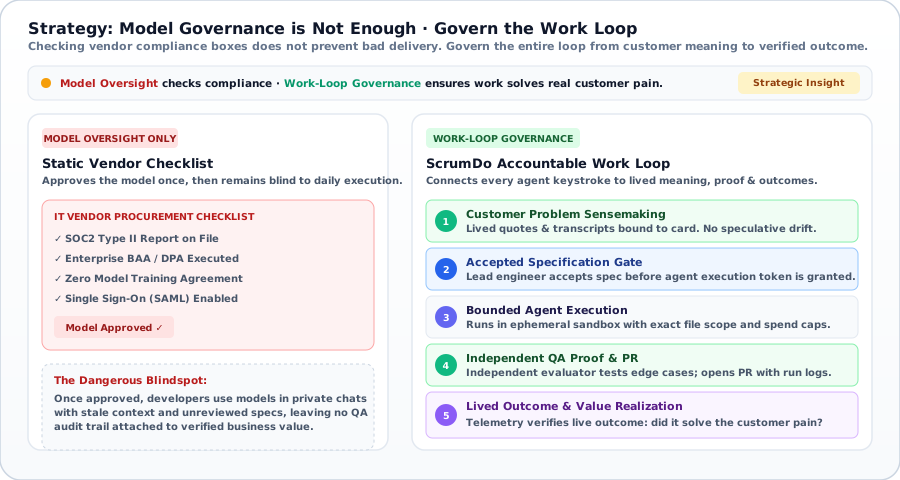
QA verification, safe reports, commits, pull requests, cost, provider, and outcome evidence return to the card.
The spec is the contract
The Living Working Spec on the card holds acceptance criteria, business rules, and known failure modes as tests. Those tests become the boundary the implementation agent works inside.
Intent first
Acceptance criteria, business rules, and known failure modes start as executable examples. Those tests join the Living Working Spec on the card. They become the boundary the implementation agent works inside.
Behavioral contract
Treat the application or a subsystem as a black box. A small set of critical scenarios runs on every change. Broader scenarios run less often. Traces, screenshots, logs, API responses, and videos stay with the card. Unit tests isolate critical logic or an edge case that is too expensive to run end to end.
The spec holds
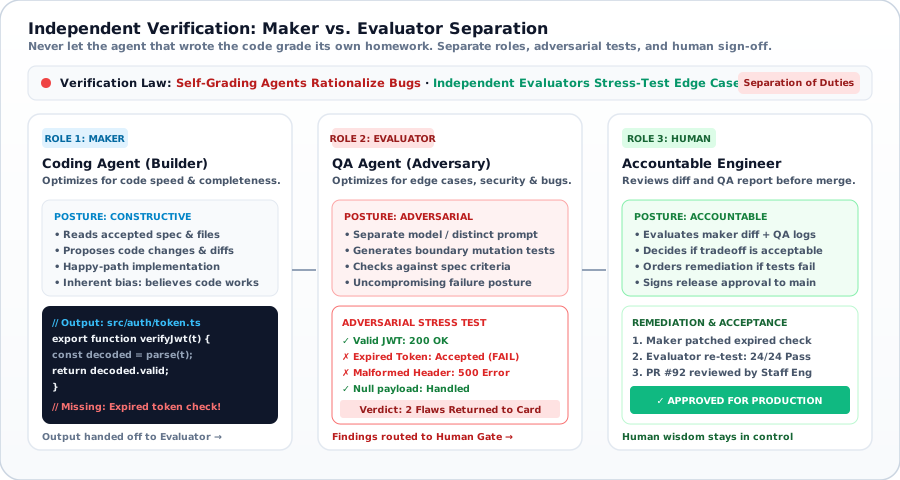
The person or agent who derives the tests is different from the agent that implements. A failed test leaves the accepted spec in place. A production defect first asks which requirement was missing. Strengthen the spec, encode the behavior, then fix the code. The same rule covers security, performance, concurrency, resilience, privacy, and resource use.
Product Spec defines intent. Tests encode executable constraints. Agent instructions and CI keep the implementation inside that boundary. A human changes the spec. The agent keeps working until the tests pass.
Humans keep judgment
Customer stories, blockers, evidence, and outcomes stay on the card. People interpret them. Agents assist from that context.
Stories on cards
Stories and signifiers stay attached to the card so people ground requirements in lived experience. Agents read that context. They do not flatten meaning or decide what customers need.
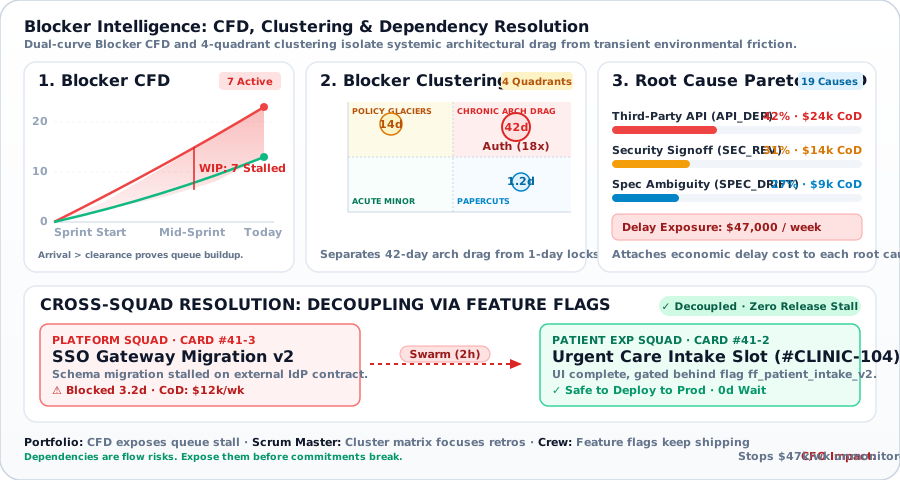
Blockers & flow
Dependencies, WIP pressure, and delivery friction stay visible on the board. Agents can surface patterns from the record, people decide what to unblock, reprioritize, or escalate.
Evidence & specs
Source-linked evidence and human-accepted specs travel with the card. Agents draft and check from that material; reviewers approve what becomes official. Agents do not sensemake the tradeoff.
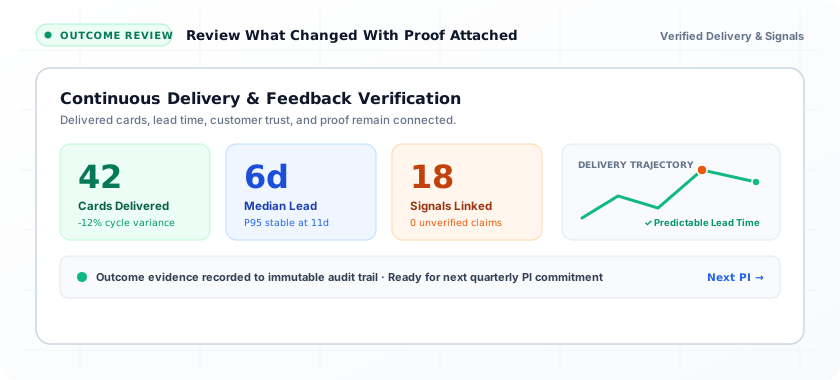
Outcomes on record
Reports, reviews, time, budget, and cost-of-delay context stay tied to the work record. Humans learn and reprioritize from proof on the card. Agents do not rewrite portfolio meaning.
Advanced capabilities
Controls for teams running multiple agents across rooms and repositories, with human approval and proof kept on the operating record.
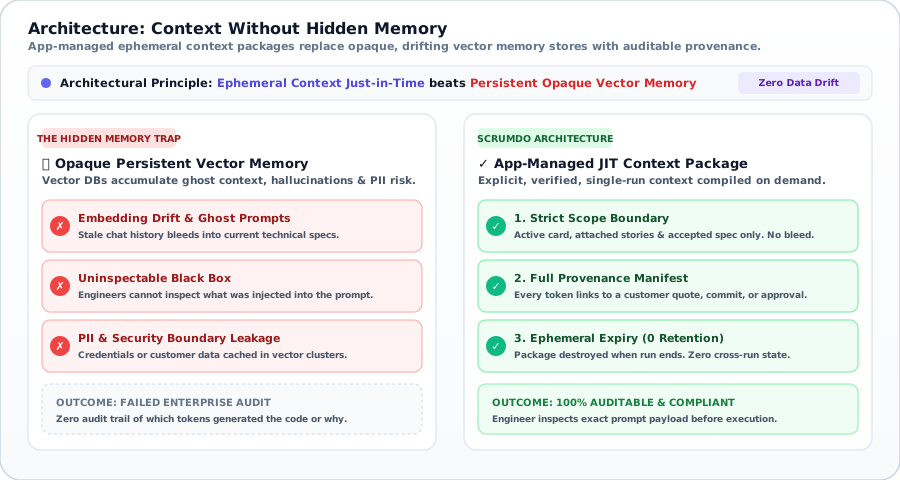
The Product Spec on the card holds requirements, architecture, acceptance criteria, and executable tests. Those tests freeze product intent before an agent implements, and they become the boundary the implementation works inside.
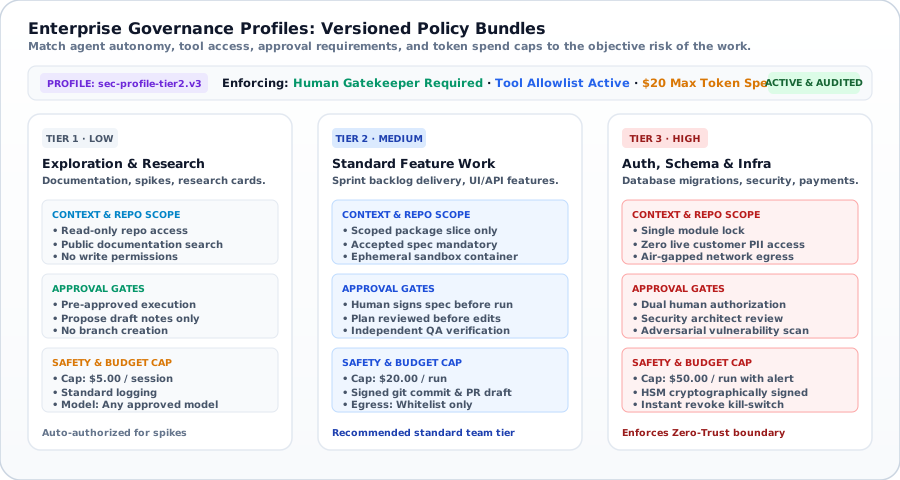
Define exactly which skills and commands agents are permitted to run, with mandatory human sign-off gates before code merges or actions take effect.
Securely link external developer tools with full provenance and verifiable audit trails on every card record.
Control monthly approved action budgets and prevent runaway AI costs with per-member and per-room allocation caps.
Full visibility into what information agents used when generating suggestions or drafts.
Coordinate specialized agents across rooms and projects under consistent governance.
Connect external tools through approval gates, not open pipes.


…and more
MCP for the tools you already use
Use Codex, Claude Code, Cursor, or another compatible client to read permitted cards and accepted specifications, propose work, and return tasks, pull requests, and proof to the same record.
Why teams choose ScrumDo
Decisions
Agents read stories, blockers, and evidence on the card. They do not sensemake. Humans interpret meaning; agents surface the context that makes judgment faster and more defensible.
Risk
Human approval gates, visible context provenance, and room-scoped permissions mean agents propose and execute inside boundaries, not as unattended automation hiding in side channels.
Control
People accept specs, approve plans, and review proof. Agents assist at every level, but humans decide what becomes official on the work record.
Collaboration
Teams, rooms, and agents share one governed record. More work and more agents do not mean more side chats, context, proof, and accountability scale together.
Guardrails by design
Approval gates, provenance, and connector proof keep agents inside boundaries your team sets.
Freeze the accepted spec and its tests before the agent implements. When a test fails, the implementation changes. A human changes the spec; the agent keeps working inside that contract.
An agent can draft, but execution waits for a human-approved plan. Approval is part of the work record.
Reviewers see what context an agent used to draft a spec or plan—readable sources and staleness, not hidden prompt payloads.
When agents use GitHub, chat, trackers, or observability tools, links and proof return to the card—not a separate audit log you have to hunt for.
Start using governed agents in ScrumDo today.